Source 3d pop up eco friendly greeting card for Birthdays, Weddings, Holidays
Find 30 listings for the 3d pop up eco friendly greeting card with customizable sizes, 3D and flip effects, and film lamination finishes. Buyers can compare specifications like thickness and printing methods from suppliers in China.
Key considerations
Products List


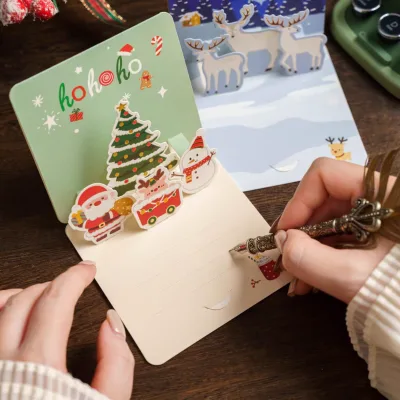


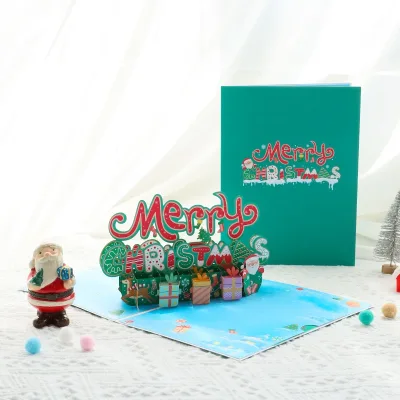
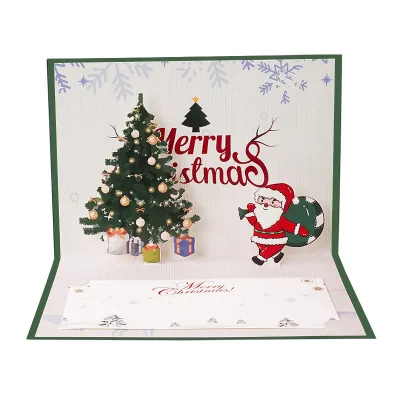
Comprehensive Sourcing Guide
Strategic Sourcing Guide for 3D Pop-Up Eco-Friendly Greeting Cards
Understanding Product Specifications and Technical Attributes
When sourcing 3D pop-up eco-friendly greeting cards, buyers must first establish a clear understanding of the technical specifications that define product viability. The core of this product category lies in the interplay between structural engineering and material sustainability. Based on available market data, the physical dimensions of these cards are not uniform; they typically adhere to standard sizes such as 1015cm, 8554mm, or 100*150mm, while also offering fully customized sizing options to meet specific branding or event requirements. The structural integrity of the pop-up mechanism is heavily dependent on the material thickness, which generally ranges from a minimum of 0.25mm to a maximum of 2mm. This thickness variance allows manufacturers to balance the rigidity required for complex 3D animations with the flexibility needed for smooth folding and unfolding.
The material composition is a critical differentiator in the "eco-friendly" segment. The supplied data indicates that coated materials are frequently utilized to ensure durability and print quality. The surface finish often involves film lamination, which provides a protective layer that can enhance the tactile experience while potentially extending the product's lifespan. The printing process is equally sophisticated, with options ranging from standard printing to specialized techniques like UV printing and convex processing. These processes are essential for achieving the visual effects that define the category, including 3D, flip, zoom, and animation effects. Buyers should verify that the specific supplier can deliver the desired effect, as the market lists options such as "3D and Flip" or "3D+Flip" as distinct product attributes. Furthermore, the color palette is flexible, with white being a common base, though custom color options are widely available to align with brand identity.
Compliance, Certification, and Environmental Standards
The "eco-friendly" designation in the greeting card industry is not merely a marketing term but a requirement for compliance with international environmental standards. While specific certification statuses for individual products in the provided data are marked as low-confidence, buyers must rigorously verify the presence of recognized certifications such as CE, ROHS, and FSC. The CE mark, for instance, is noted in the context of product standards, suggesting that European market entry requires adherence to specific safety and environmental directives. Similarly, the FSC (Forest Stewardship Council) certification is a critical benchmark for ensuring that the paper and board materials originate from responsibly managed forests, a non-negotiable aspect for eco-conscious procurement.
Buyers should not assume that a product labeled "eco-friendly" automatically possesses these certifications. Instead, the procurement strategy must include a mandatory request for documentation proving compliance. The data mentions "Standard Size" and "Product Standard" entries, which often imply adherence to specific manufacturing norms, but these do not replace third-party environmental audits. When evaluating suppliers, particularly those originating from regions like Jiangmen City, China, or Zhejiang, China, it is vital to confirm that their production processes align with the environmental claims. This includes verifying that the inks used (such as UV printing inks) are free from heavy metals and that the coating processes do not introduce harmful volatile organic compounds (VOCs). The "Regional Feature" of Europe suggests that products destined for that market must meet stringent EU environmental regulations, making the verification of these standards a primary step in the supplier qualification process.
Cost Drivers and Pricing Structure Analysis
The pricing structure for 3D pop-up greeting cards is influenced by a complex matrix of factors, including material costs, customization complexity, and order volume. The observed listed price range in the market spans from $0.01 to $5.99 USD, indicating a significant variance based on the level of detail and the quality of materials used. The Minimum Order Quantity (MOQ) is another critical cost driver, with observed ranges between 10 and 2000 units. Lower MOQs, such as 10 units, are typically associated with higher per-unit costs due to the setup expenses for custom dies and printing plates, whereas higher volumes allow for economies of scale that drive the price toward the lower end of the spectrum.
Several specific attributes directly impact the final cost. The "Customization" availability is a major factor; products that offer text customization, photo insertion, pattern selection, and additional elements will command a premium over standard designs. The complexity of the 3D mechanism also plays a role; a simple flip card is less expensive to produce than a complex animation or zoom mechanism that requires precise engineering and multiple layers of paper. Additionally, the surface finishing options, such as matte varnishing or film lamination, add to the production cost. Buyers must also consider the packaging requirements, as the data indicates options ranging from simple cartons to palletized shipments and plywood boxes. The choice of packaging can significantly affect the total landed cost, especially for international shipping. Understanding these variables allows buyers to negotiate more effectively and allocate their budget to the most impactful areas of the product, such as material quality or design complexity, rather than unnecessary features.
Typical Applications and Market Segmentation
The versatility of 3D pop-up eco-friendly greeting cards makes them suitable for a wide array of applications, ranging from personal celebrations to corporate branding. The data highlights specific attributes such as "Birthday," "Christmas," and "Various Festivals," indicating that these products are heavily utilized in the holiday and personal gifting sectors. The "Universal" suitability suggests that the design can be adapted for various occasions without requiring a complete redesign of the underlying mechanism. For corporate clients, the "OEM" (Original Equipment Manufacturer) capability is a key feature, allowing businesses to brand these cards with their logos, specific messages, and unique visual identities.
The "Various Uses" attribute further expands the potential market to include trade shows, promotional events, and corporate gifts. The ability to customize the card with specific text and photos makes it an ideal medium for personalized marketing campaigns. The "Type: Customizable" and "Customized" attributes confirm that the product is not limited to off-the-shelf designs but can be tailored to specific campaign goals. For instance, a company might use a 3D pop-up card to showcase a new product line, where the pop-up mechanism reveals the product in a three-dimensional format. The "Dieverse" usage note, while ambiguous, suggests a broad applicability across different industries. Buyers should align their sourcing strategy with their specific application needs; for example, a high-volume event might prioritize cost and speed, while a luxury brand might prioritize material quality and intricate design details.
Supplier Evaluation and Origin Verification
Evaluating suppliers for 3D pop-up greeting cards requires a deep dive into their manufacturing capabilities and geographical origins. The data identifies specific production hubs such as Jiangmen City and Zhejiang in China, which are known for their paper and printing industries. When assessing suppliers, buyers should look for evidence of their "Processing" capabilities, specifically their ability to handle complex tasks like printing, convex processing, and film lamination. The presence of specific product models, such as GZY-C146, GZY-C0349, and S-1207, indicates that suppliers have established production lines for these specific types of cards. However, the existence of a model number does not guarantee that the supplier can produce the exact specifications required by the buyer.
Buyers must verify the supplier's capacity for customization. The data lists "Customization Options" including text, photos, and patterns, but the actual implementation of these options varies by supplier. A robust supplier evaluation should include a request for samples that demonstrate the supplier's ability to handle the specific 3D effects required, such as "Animation" or "Zoom." Additionally, the "Product Packing" options, ranging from CTN to Plywood Boxes, should be assessed to ensure they meet the buyer's logistical needs. The "Standard Size" and "Custom Size" capabilities should be confirmed, as not all suppliers may have the tooling to produce non-standard dimensions. Finally, the "OEM" status should be verified to ensure the supplier is willing and able to produce private-label goods, which is essential for many corporate procurement strategies.
Quality Control and Long-Term Procurement Considerations
Ensuring consistent quality in 3D pop-up greeting cards requires a rigorous quality control (QC) protocol that addresses both the mechanical and aesthetic aspects of the product. The "Min. Thickness" of 0.25mm and "Max. Thickness" of 2mm must be strictly monitored to ensure that the cards fold correctly without tearing or losing their shape. The "Surface Finish" of film lamination must be inspected for bubbles, peeling, or uneven application, which can detract from the premium feel of the product. The "Printing" quality, particularly for UV printing and 6-color processes, must be checked for color accuracy, registration, and clarity of the 3D effects.
Long-term procurement considerations involve building a sustainable relationship with suppliers who can maintain quality over time. The "Customization" availability should be evaluated for its consistency; a supplier that can deliver high-quality customizations in the first order must be able to replicate that quality in subsequent orders. The "Lead Time" and "MOQ" flexibility are also crucial for long-term planning, as buyers need to ensure that the supplier can scale production up or down based on demand fluctuations. The "Product Origin" and "Regional Feature" should be considered in the context of supply chain resilience, especially given the potential for geopolitical or logistical disruptions. Finally, the "Eco-friendly" claim must be continuously verified through periodic audits to ensure that the supplier maintains their environmental standards, which is essential for maintaining the brand's reputation and compliance with international regulations.
Comparative Analysis of Product Models and Features
To facilitate informed decision-making, buyers can compare different product models based on their specific attributes. The following table summarizes the key variations observed in the market data, highlighting the differences in models, standards, and features.
| Product Model | Standard Size Options | Thickness Range | Key Features | Origin |
|---|---|---|---|---|
| GZY-C146 | 1015cm, 8554mm | 0.25mm - 2mm | Recyclable, Film Lamination | Jiangmen City, China |
| GZY-C0349 | 100*150mm or Custom | 0.25mm - 2mm | Customizable, CTN/Pallet | Jiangmen City, China |
| GZY-C0346 | Custom | 0.25mm - 2mm | Customizable, CTN/Pallet | Jiangmen City, China |
| GZY-C0348 | Custom | 0.25mm - 2mm | Customizable, CTN/Pallet | Jiangmen City, China |
| GZY-C0347 | Custom | 0.25mm - 2mm | Customizable, CTN/Pallet | Jiangmen City, China |
| GZY-C0350 | Custom | 0.25mm - 2mm | Customizable, CTN/Pallet | Jiangmen City, China |
| S-1207 | Customize | 0.25mm - 2mm | Customizable, Carton | China |
| S-1205 | CE Standard | 0.25mm - 2mm | Customizable, Various Uses | Zhejiang, China |
| S-1204 | CE Standard | 0.25mm - 2mm | Customizable, Various Festivals | Zhejiang, China |
| card | Custom | 0.25mm - 2mm | Customizable, OEM | China |
| greeting card-008B | Custom | 0.25mm - 2mm | Customizable, Various Uses | China |
This comparison illustrates that while many models share similar thickness ranges and customization capabilities, the specific standard sizes and regional origins vary. Buyers should use this data to identify models that best fit their specific size requirements and logistical preferences. The presence of "CE" standards in some models suggests a higher level of compliance for European markets, while the "Customize" options in others offer greater flexibility for unique projects. By carefully analyzing these attributes, buyers can select the most appropriate product model for their specific procurement needs, ensuring a balance between cost, quality, and compliance.
FAQs
What customization options are available for these cards?
Buyers can request text customization, photo insertion, pattern selection, and additional elements. These options allow for unique designs while maintaining the 3D pop-up structure and eco-friendly material requirements.
Which standard sizes are offered for 3D pop-up cards?
Standard sizes include 10*15cm, 85*54mm, and 100*150mm. Custom sizes are also available to meet specific branding or event requirements, ensuring flexibility for various applications.
How thick are the materials used for these greeting cards?
The material thickness ranges from a minimum of 0.25mm to a maximum of 2mm. This variance supports the structural integrity needed for complex 3D animations and flip effects.
Can I find suppliers in China for these eco-friendly cards?
Yes, suppliers are located in Jiangmen City and Zhejiang, China. These regions are known for their paper and printing industries, offering various models and customization capabilities.
What surface finishes are applied to the cards?
Common surface finishes include film lamination and matte varnishing. These processes protect the card and enhance the tactile experience while ensuring durability for repeated use.
Which printing methods are used for these cards?
Printing methods include UV printing and convex processing, often utilizing a 6-color process. These techniques ensure high-quality visuals and precise execution of 3D and animation effects.